sherry

Tea and Sherry Hour

Inn of the Governors delights in hosting a daily Tea & Sherry hour from 4-5pm for guests of the Inn. Choose from a variety of tea flavors to help unwind from a full day of shopping, museum hopping, and art viewing, or relax into a savory demitasse of one of our Sherries. We provide a Manzanilla Sherry, which is a dry Sherry meant as an aperitif prior to dinner; if you enjoy Chardonnay or Pinot Grigio you will appreciate this Sherry. We also provide an Oloroso Sherry, which is rich and sweet, much like a Port. Similar to Port, Oloroso Sherry is a wonderful dessert drink.

Speaking of dessert, you may also enjoy a Biscochito, the state cookie of New Mexico. New Mexico state legislature enacted the Biscochito as the state cookie in 1989, though the recipe dates back to the 1850’s; it was designed to be a portable cookie-perfect for a few day’s ride via horseback or covered wagon. It was originally cooked in a Horno (pronounced or-no)-an outside oven made of mud adobe. The Biscochito has since become a Christmas tradition in New Mexico to serve to relatives and friends alike.
Manzanilla

is a light and pale sherry produced in the seaside town of Sanlúcar de Barrameda
whose proximity to the sea contributes a unique freshness to this dry and
delicate wine.

Cream sherry

ranges in color from chestnut to mahogany, are full bodied and
velvety, with fragrant aromas of nougat and caramel.


Osborne Manzanilla

the driest of our sherries, is a young, very delicate wine with a pale color, a
lovely dry palate with notes of almonds and bread dough. Alcohol by volume: 15%

Osborne Cream

features a smooth, gentle sweetness unmatched by any other wine, featuring a
distinctively nutty fragrance, a deep auburn color, and full-bodied, rich
flavors that are velvety on the palate. Alcohol by volume: 17%


What is sherry?

Sherry is a wine made in Spain that comes in a wide variety of styles from bone dry to lusciously sweet, with flavors that range from brisk nuttiness to lush flavors of dried fruit.

The light, dry styles of sherry – finos and manzanillas – are served well chilled and are wonderfully refreshing. Medium dry sherries such as amontillado and palo cortado are more amber in color and take on a slightly nutty character. Olorosos and cream sherries range from chestnut to mahogany in color and have a rich complexity and an elegant sweetness. Pedro Ximénez (both the name of the grape and the style of sherry) are the darkest in color, with plush notes of dried fruit and opulent sweetness.

Sherry is fortified, meaning that it is slightly higher in alcohol (15-20%) than the average table wine (11-15%), which makes it not only appealing on its own, but also an intriguing ingredient in cocktails.

Where is sherry made?

Sherry is made in an area called the “Sherry Triangle”, formed by the towns of Jerez de la Frontera, El Puerto de Santa María and Sanlúcar de Barrameda in southeastern Spain, approximately 60 miles from the city of Seville.

What grapes are used to make sherry?

Sherry is primarily made from three white grape varietals, depending on the style: Palomino, Pedro Ximénez, and Moscatel.

How is it made?

Once the pressed juice from the harvest has been fermented, a classification is made based on the specific characteristics of the wine. Wine that exhibits a particular paleness and finesse will be selected to be aged as fino or manzanilla, and will undergo a “biological” aging process, while wine with more structure will undergo an “oxidative” process.

Wine selected to be aged as fino or manzanilla is fortified with grape alcohol to 15.5%, which will allow for a layer of naturally occurring yeast, called flor, to form on the top of the wine in the barrels. The flor protects the wine from exposure to air and imparts specific characteristics to the wine. This type of aging is known as biological aging.

Young wine with greater structure selected to undergo oxidative aging is fortified to a minimum of 17%, a level too high for the flor to develop and thus the wine is exposed to air as it ages in the cask. The controlled oxid

ation that occurs darkens the color of the wine and deepens the flavors and complexity of the wine’s character.

The aging of sherry takes place in what is called the solera system, which is unique in the world of wine. It is a dynamic system of fractional blending in which younger wines are added to

stocks of older wines to maintain the character and quality of the finished product.

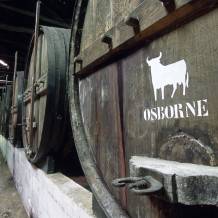
A sherry’s solera consists of several rows of oak barrels, stacked one atop the other, which contain wines of different ages. Wine to be bottled is drawn only from the oldest row of barrels, called the solera, which rests on the ground (in Spanish, suelo). Only about a third of each barrel is taken from each barrel in the solera, and this wine is replaced by wine from the next-oldest row, or criadera, just above it. Row after row is refilled in turn, with new wine always being poured in the youngest barrels which rest at the top. In this way, the older wines pass on their qualities to the younger ones, and the solera never loses its character. Because the wine drawn off to be bottled is a blend of wines of varying ages, sherry never carries a vintage date.In order to enjoy Sherry in all its glory, follow these simple tips:

Serving

Just like white wine, Manzanilla and Fino sherry should be served very chilled. Also, skip the copita and pour straight into a wine glass.

Serve Amontillado, Cream and PX at room temperatures or slightly chilled. Cream is also surprisingly refreshing over ice.

All styles of sherry are very versatile, they can be served straight-up, or as part of a delicious cocktail, as an aperitif, or with dinner. Click here to explore all the ways to enjoy sherry.

Osborne History:

History of the Bodega from the Bodega
Osborne is Spain’s most prestigious producer of wines and spirits. Headquartered in El Puerto de Santa María, Spain, in the famous brandy and sherry-producing region of Jerez. Osborne currently produces world-renowned brandy, sherry, port, fine regional wines and anise liqueur.

Founded in 1772, Osborne is one of the oldest firms of wine and spirit producers in Spain. The firm’s industrial and commercial activities were started by Thomas Osborne Mann, an Englishman. Upon Mann’s death, his sons, Thomas and John, inherited the business. While John served as a Spanish diplomat, Thomas distinguished himself as an industrious and enterprising manager of Osborne, and in 1869. Thomas received the hereditary title of Count of Osborne, making him the first producer of wines and spirits to posses a noble title.

Since those early years, Osborne has remained in family hands. Today, Mr. Tomás Osborne Gamero-Cívico, the fifth Count of Osborne, directs the Company as Chairman of the Board of Directors.

Spaniards have always known Osborne for their famous bull’s scattered throughout the countryside of Spain. Their sizes and uses vastly range from small stickers stuck proudly to the back of a car bumper to enormous metal sculptures dotting the Spanish landscape. Emblematic and with a rich history, many people relate the name Osborne to Spain without ever having a fleeting thought of wine cross their minds.

All it takes is a drive across Spain to see the legendary brandy advertisement that has become a symbol of Spanish culture both here at home and abroad.

The Osborne Bull is the black silhouette of bull that stands on hilltops and along the roadside in many – but not all – parts of Spain. It began as nothing more than an advertisement in 1956 when the Osborne Group set out to promote Veteran brandy. An Andalucian artist by the name of Manolo Prieto suggested the bull and thus set a legend in motion.

Prieto, born in Cádiz in 1912, was actually quite a prolific artist. He will probably always be most remembered though, for his roadside monuments to Spanish brandy. According to some reports, this ended up being a source of disappointment to man who was so dedicated to his vocation.

The Osborne Bull, however, left Prieto’s hands and went on to take on a life all its own. It started out as a wooden figure, quickly transformed into metal in order to withstand weather conditions. Later it had to meet even tougher regulations, which, by 1962, brought it to its full height and added its current support structure.

The big controversy began when the Traffic Department, intent on reducing accidents by wiping away any possibly roadside distraction, ordered that the bull be taken down in 1994. There was public outcry across many parts of Spain, especially Andalucia, where the regional government promptly declared it part of Andalucian Heritage.

In the years that followed, the Osborne Bull would be recognised by Spanish courts as a genuine cultural symbol and it would remain along roadsides in many areas.

Even though the Osborne Bull really is a commercial figure, it’s cultural status as a symbol of all things Spanish is so widely accepted as to create a backlash in some parts of Spain with Catalan’s ripping down any attempt to raise an Osborne Bull and some Basque’s raising a Basque sheep instead.

In spite of all the controversy, the bull will most certainly go on.